 By
By A cracked driveway or uneven walkway can seem like a minor maintenance job until someone catches a foot on a raised edge. Outdoor concrete affects how safely people enter your home, carry groceries, use a stroller, or walk across the property after rain. Addressing a problem early can also prevent water and ground movement from making it harder to repair.
The right solution is not always a new slab. Some surfaces need a targeted repair, while others have underlying drainage or base problems that call for replacement. Before choosing a finish or requesting a quote, it helps to understand what is causing the damage and how the space will be used.
Start With a Safety Check
Walk the routes people use most often: the path from the street, the approach to the front door, the driveway beside parked cars, and any patio or poolside area. Look for lifted edges, loose fragments, deep cracks, standing water, and places where the surface feels slippery when wet. Check at different times of day, since shadows and poor lighting can hide a change in level.
A crack alone does not tell the whole story. A narrow, stable crack may be mainly a maintenance concern. A slab that has sunk or tilted can create a trip point and direct water toward the house. Surface flaking may also leave loose material underfoot. If the ground keeps moving, covering the visible damage without addressing its cause is unlikely to hold up.
Keep people away from any area that presents an immediate fall risk, especially steps, entryways, and routes used by visitors. A concrete contractor can assess whether the existing surface is sound enough to repair and whether drainage, soil settlement, or tree roots are contributing to the problem.
Repair the Concrete or Replace It?
Repair makes sense when the slab is largely sound and the damage is limited. Depending on its condition, a contractor may fill suitable cracks, repair a damaged section, or lift a settled slab. The repair should deal with the reason the surface moved or deteriorated, as well as the visible defect.
Over time, weather and daily wear can cause cracks or shifting in these outdoor surfaces. When this happens, simple repairs are often enough to restore their safety and appearance. Homeowners can hire professional concrete services to handle these issues before they become major hazards. These experts have the right tools to lift sunken slabs and seal deep cracks. Taking care of these small problems early saves money and keeps your property looking its best.
Replacement deserves consideration when damage covers much of the surface, slabs are breaking apart, or earlier repairs have repeatedly failed. It may also provide an opportunity to correct an awkward layout, poor drainage, or a walkway that is too narrow for comfortable use.
If only one section has failed, ask whether it can be replaced without disturbing the rest of the surface. Where several sections have shifted, a broader replacement may give you a more consistent result. Ask the contractor to explain what they found beneath the concrete and why they recommend a particular approach. A lower initial price is useful only if the work addresses the problem you need solved.
Plan New Concrete Around Daily Use
If you are installing a new driveway, walkway, or patio, begin with function. Consider where people naturally walk, where vehicles turn, and where rainwater goes. A clear route to the entrance is easier to use than a decorative path that forces visitors onto the lawn. Around a patio, leave enough usable space for furniture without blocking circulation.
Water management needs particular attention. The finished surface should guide water away from the home and avoid creating puddles where people walk. The ground beneath the concrete also needs proper preparation. If the base settles unevenly, even a carefully finished surface can shift or crack.
Discuss the planned slab, base, drainage, and joints with your contractor before work begins. Joints help manage where concrete is likely to crack as it changes during curing and use. Their location should make sense for both the slab and the finished appearance.
Ask how weather conditions will affect installation and when the surface can safely be used. Concrete needs appropriate curing, and the answer may differ for foot traffic and vehicles. Walking or parking on it too soon can undermine work that was otherwise properly planned.
Choose a Finish That Fits the Space
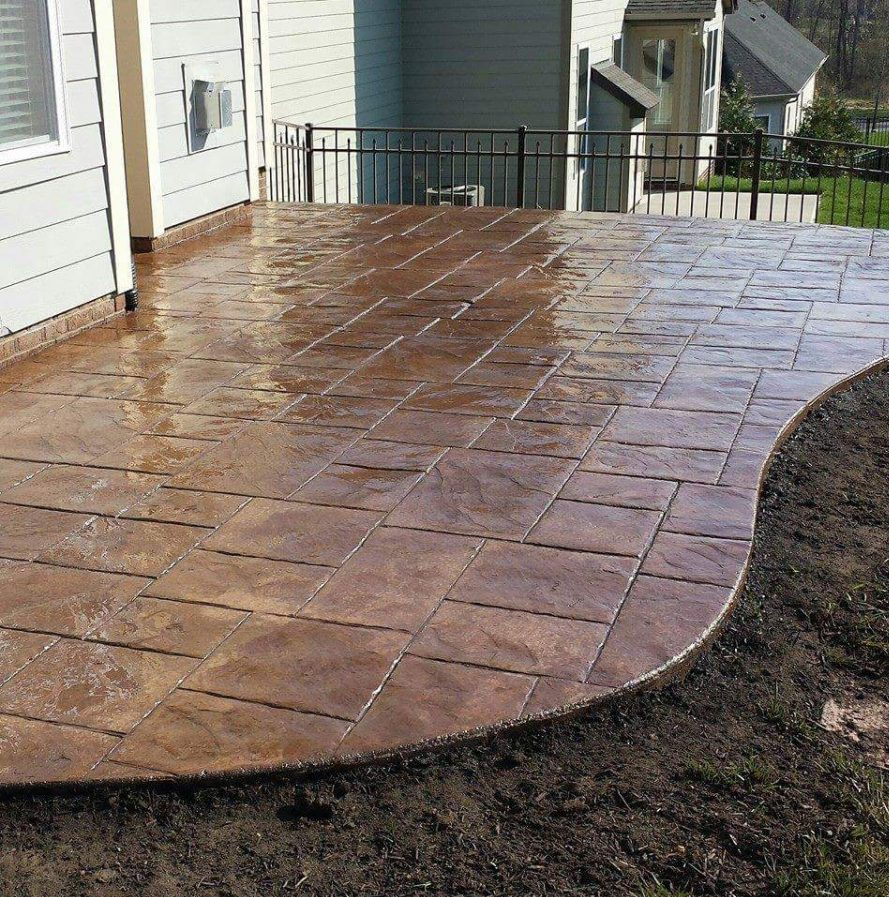
Stamped concrete can give a patio or walkway a patterned appearance, including designs inspired by stone or brick. It offers homeowners a way to create a coordinated look across outdoor areas, but appearance should not be the only deciding factor.
Think about how the surface will feel underfoot in rain or near a pool. Texture and any sealer applied to the concrete can affect slip resistance. Ask to see a sample of the proposed finish and discuss how it will perform in the specific location. A glossy appearance may appeal in a photograph while being less suitable for a frequently wet walking route.
Stamped concrete also requires care. Sealers should be selected and applied for the surface and its exposure, following the product instructions. The finish is not maintenance-free, and it is not automatically cheaper or more durable than every type of natural stone. Costs and performance depend on the design, installation, local conditions, and ongoing care.
A simpler textured finish may be the better choice for a busy driveway or an entrance where dependable footing matters most. You can still make that surface attractive through its layout, colour, or borders. The best design suits the house while remaining practical for the people who use it.
Protect Outdoor Concrete Through Routine Care
A little regular attention makes changes easier to spot. Remove leaves and debris that hold moisture against the surface or block drainage. Clean spills with a method suitable for the finish, and check cracks and joints after periods of heavy rain or freezing weather. If water begins collecting in a new place, investigate the cause rather than repeatedly sweeping it away.
In colder climates, clear snow promptly and ask your contractor which ice-control methods are appropriate for the concrete. Some deicing chemicals can contribute to deterioration, particularly where moisture and salts collect in joints. Products used near a driveway may also affect surrounding plants and materials. Check the potentially hazardous effects of a product before using it, and follow its instructions.
If your concrete has a decorative finish, ask when its sealer should be inspected or renewed. There is no single schedule that fits every patio or driveway. Sun exposure, traffic, climate, and the sealer itself all affect its condition. Cleaning the surface and addressing damage before applying another coat matters more than resealing on an arbitrary date.
Compare Contractors on the Work That Matters
A useful quote should describe more than the finished colour and total price. Ask what will be removed, how the base will be prepared, how water will drain, what finish will be applied, and how the new work will meet existing surfaces. Clarify who handles cleanup and what you should do while the concrete cures.
For decorative work, review examples of projects with a similar use and finish. Elite Concrete is one provider homeowners may consider when researching concrete options. Whichever contractor you contact, request a written scope that makes it easy to compare proposals. Ask how they would handle an unexpected problem, such as unstable ground discovered after removing an old slab.
A contractor should also be willing to explain the limits of a repair. Promises that a surface will never crack, become slippery, or need maintenance are not a sound basis for choosing who works on your property.
A Safer Surface Starts With the Right Diagnosis
New concrete can improve the appearance and usability of a property, but replacing everything is not always necessary. Start by identifying hazards and the reasons they developed. Then choose a repair or installation plan that accounts for drainage, ground preparation, traction, and ongoing care.
That approach gives you more than a fresh-looking driveway or patio. It creates an outdoor space that is easier to use and maintain, with fewer avoidable hazards for your household and visitors.