 By
By When homeowners invest in elevated interior design, they focus most of their attention on countertops, flooring, and lighting fixtures. Standard builder-grade interior doors are frequently overlooked, left as hollow-core, plain white slabs with cheap brass hardware. These doors feel flimsy, fail to isolate sound, and instantly diminish the architectural weight of a home. Upgrading your interior doors is one of the most effective ways to introduce an immediate sense of luxury, substance, and high-end craftsmanship to your living space.
A truly luxurious door appeals to multiple senses. It provides a solid weight when opened, closes with a satisfyingly quiet thud, and features detailed proportions that frame the transition from one room to another. By changing out cheap materials, upgrading hardware, and adding deliberate architectural details, you can completely transform the overall atmosphere of your home without the massive budget of a full-scale renovation.
Swap Hollow-Core Slabs for Solid-Core Alternatives
The fundamental difference between a cheap builder-grade door and a high-end luxury door rests in its internal composition. Hollow-core doors consist of a thin cardboard honeycomb grid sandwiched between two fragile layers of hardboard or plywood. They weigh very little, transfer noise freely across rooms, and puncture easily under accidental impacts.
Solid-core doors offer the perfect balance of luxury and practicality. They are constructed with a dense composite wood core wrapped in wood veneer, mimicking the substantial feel of 100 percent solid wood at a more manageable price point. Upgrading to solid-core alternatives delivers immediate acoustic privacy, keeping noises from utility rooms, bedrooms, and home offices fully contained. The sheer physical weight of these doors completely changes how a home feels to live in, signaling quality structural design every time you turn a handle.
Elevate the Hardware with Premium Finishes
Door hardware functions as the jewelry of your home. Standard polished brass or stamped chrome knobs look dated and feel incredibly light in your hand. Replacing this basic hardware with premium, heavy-duty locksets drastically enhances your home aesthetic.
-
Select Solid Brass or Forged Steel: Avoid hollow, stamped metals. Look for solid-cast brass or thick steel hardware that offers physical resistance and smooth mechanical operation.
-
Embrace Modern Profiles: Trade round knobs for sleek, ergonomic levers, or choose clean, square-back plate designs that align with contemporary architecture.
-
Choose High-End Finishes: Opt for sophisticated, durable finishes such as satin brass, matte black, oil-rubbed bronze, or unlacquered brass, which develops a beautiful, authentic patina over time.
-
Upgrade the Hinges: Never leave old, squeaky, paint-splattered hinges on your doors. Match your new hinge metal directly to your new handles, and choose heavy-duty ball-bearing hinges for completely silent operation.
Introduce Architectural Depth with Applied Molding
If buying brand-new solid doors for every room exceeds your current budget, you can dramatically elevate your existing flat-panel doors by installing custom applied molding. Flat slabs offer zero visual interest, but adding a symmetrical panel structure creates classical shadows and architectural depth.
Purchase high-quality wood trim or primed medium-density fiberboard molding strips from your local lumberyard. Measure your door slab carefully and map out a balanced layout, such as a traditional two-panel, three-panel, or a modern shaker-style grid design. Cut the trim pieces at perfect forty-five-degree angles using a miter box, then secure them to the door face using heavy-duty construction adhesive and a pneumatic brad nailer. Fill the tiny nail holes and seams with professional wood putty, sand the surface until it feels glass-smooth, and apply a fresh coat of premium paint. This simple addition completely disguises a basic flat door, giving it the appearance of an expensive custom-milled architectural feature.
Make a Statement with Dramatic Paint and Color
The standard default choice for interior trim and doors is basic contractor-white latex paint. While clean, it fails to make a deliberate design statement. Choosing unexpected paint finishes and deep tones adds high-end custom appeal.
The Power of High-Contrast Dark Tones
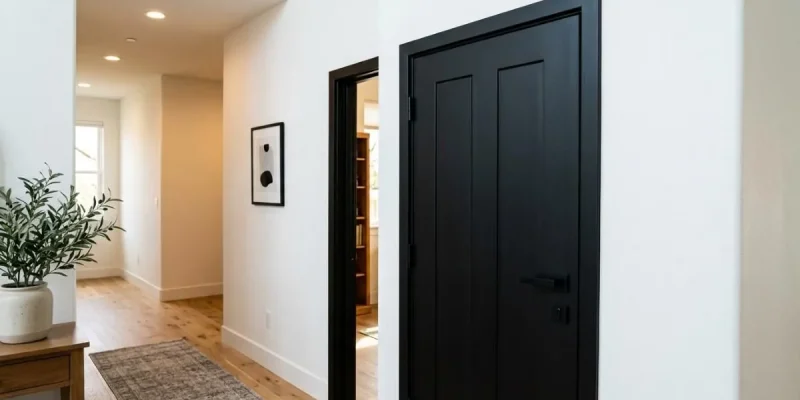
Painting interior doors in rich, deep colors establishes a sense of grandeur and helps anchor a room. Consider sophisticated hues like charcoal gray, deep navy blue, forest green, or a rich velvety black. Dark doors frame the views between rooms beautifully, turning a simple hallway transition into a curated gallery experience. When pairing dark doors with crisp white or light beige walls, you introduce a sharp, intentional contrast that screams high-end luxury.
Experiment with High-Gloss and Semi-Gloss Finishes
Standard flat or eggshell paints trap grime and look dull on woodwork. For an ultra-luxurious, European-inspired look, use a premium Dutch lacquer or a oil-modified high-gloss paint. High-gloss finishes reflect light across dark hallways and highlight the crisp edges of your door molding. If a mirror-like high gloss feels too bold for your style, a rich satin or semi-gloss finish still offers excellent durability, resists messy fingerprints, and wipes clean with a damp microfiber cloth.
Invest in Statement Doors for High-Traffic Areas
You do not necessarily have to buy identical doors for every square inch of your home. You can make an immense impact by prioritizing unique focal-point doors in the main high-traffic, public gathering areas of your property.
For entries to dining rooms, home libraries, or primary master suites, replace standard swing doors with oversized double doors or custom sliders. Installing iron-framed glass doors, reclaimed antique wood doors, or extra-tall eight-foot doors instantly alters the scale of a room. These large-scale doors draw the eye upward, create the illusion of soaring ceiling heights, and allow natural light to filter deep into interior corridors while maintaining a clear spatial boundary.
Frequently Asked Questions
Can my existing door frames handle the weight of new solid-core doors?
In most standard residential framing, existing jambs can support solid-core doors without structural issues, provided the frame is securely nailed into the wall studs. However, because solid-core doors weigh significantly more than hollow ones, you must replace the standard short hinge screws with heavy three-inch screws that anchor all the way through the jamb and deep into the wooden wall studs to prevent sagging over time.
What is the ideal height for high-end luxury interior doors?
While standard American homes feature six-foot-eight-inch doors, modern luxury properties frequently utilize seven-foot or eight-foot interior doors. If you are doing a full remodel and have at least nine-foot ceilings, raising the header heights to install taller doors dramatically expands the spatial feel of your entire home.
Should all interior doors in a house look exactly the same?
They do not need to be perfectly identical, but they should remain cohesive in style. It is common practice to use more intricate, solid, or glazed statement doors for public spaces like kitchens and living areas, while utilizing simpler, matching solid-panel profiles for secondary spaces like linen closets, guest bedrooms, and bathrooms.
How do I prevent newly painted high-gloss doors from showing brush marks?
Achieving a smooth, factory-like finish requires using a self-leveling paint formula and applying it with a high-density foam roller or a professional airless paint sprayer. If you choose to use a brush, invest in a premium synthetic soft-bristle brush, apply thin coats, and avoid brushing back over areas that have already started to dry.
Are pocket doors considered a luxury upgrade compared to traditional swinging doors?
Pocket doors are highly luxurious when executed correctly with premium hardware. They save valuable floor space and slide out of sight entirely, creating a seamless open layout. To make them feel high-end, you must install heavy, solid-core slabs and smooth-gliding aluminum tracks with a soft-close mechanism so they never rattle or jump off their tracks.
Is it necessary to paint both sides of an interior door the same color?
No, you can paint opposite sides of a door different colors to match the specific color palettes of individual rooms. For instance, the hallway side of a door can be painted a cohesive black to match the home main corridor, while the inside face can be painted white to keep a small child bedroom feeling bright and airy. Just ensure you paint the hinged edge of the door the color of the room it swings into for a seamless look when open.